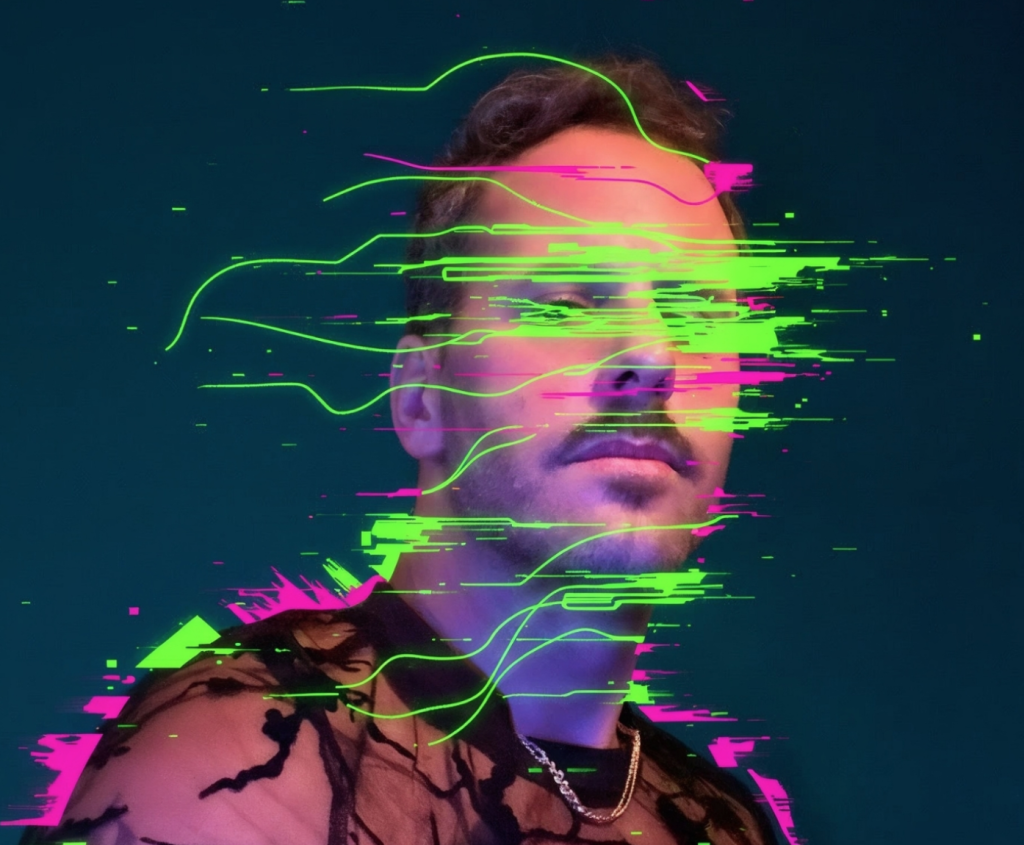
In a world that continuously demands our composure and quiet compliance, music remains one of our last sanctuaries for uninhibited truth. Enter The New Citizen Kane—an artist, visionary, and theatrical force whose universe dares us to step inside and feel.
Blurring the boundaries between shimmering electronica, cinematic storytelling, and human vulnerability, his signature sound—a blend he terms “rhythm & synth”—functions as both a physical release and an emotional awakening. With his latest visual EP experience, FREE to FEEL, he strips away the industry’s artificial noise to offer something far more profound: absolute permission to confront our contradictions, embrace our vulnerability, and dance through the darkness into self-discovery.
Today, we dive beneath the dazzling surface of his world to explore the man behind the persona, the courage of independent artistry, and the liberating power of art that moves both the body and the soul.
Welcome to our redaction! We’re discovering your work today through a very distinct visual and sonic identity. Who is The New Citizen Kane behind the project?
The New Citizen Kane started as a persona, but over time he’s become a much more honest extension of me.
At the heart of it, I’m just a curious human being trying to make sense of the world through music, visuals and storytelling. I’ve always been fascinated by the contradictions of being human—the beauty, chaos, vulnerability, absurdity and joy of it all—and that’s really what I’m exploring through TNCK. The name and the visual world give me a space to exaggerate, play and create these different characters and universes, but underneath all of that there’s always something very personal.
I suppose the simplest answer is: The New Citizen Kane is me: a son, a husband, a father, a human, just with the volume turned up.
Your universe blends music, theater, and cinema. How does your background in performing arts shape your approach to songwriting and world-building?
My theatre background definitely influences the way I create. We’re such visual creatures, and I think creating scenes can amplify the emotion of a song enormously.
When I’m writing about something personal or vulnerable, I often find that creating a visual world around it allows me to communicate the feeling without spelling everything out. The listener isn’t just hearing a story—they’re stepping inside it
That’s probably the theatre instinct in me: I’m always trying to transport people somewhere. Music, visuals, performance and narrative all become different parts of the same world.
You define your sound as “rhythm & synth,” where physical movement meets emotional intelligence. How do you strike that balance between deep themes and danceable rhythms?
For me, the two things have always belonged together. Rhythm moves the body, while synthesis gives me this almost limitless palette for exploring emotion. I’ve always pushed back against the idea that dance music has to be superficial. Why can’t something make you think and make you dance at the same time? I actually think the propulsion of the music can make deeper subjects more accessible. You can be physically experiencing the release of a song while the lyrics are quietly getting under your skin.
That’s what I mean by rhythm & synth: emotional depth and physical movement existing in the same space.
Your EP is titled FREE to FEEL. At its core, what do you think we fear more today: truly feeling our emotions, or expressing them to others?
I think we’re probably afraid of both, but perhaps we’re most afraid of what feeling might require us to confront. We’re constantly encouraged to manage ourselves—to be productive, composed, successful, attractive, whatever the expectation happens to be. Actually sitting with difficult emotions can feel uncomfortable, and expressing them makes us vulnerable to other people. But I think there’s enormous freedom in allowing yourself to feel without immediately trying to fix or rationalise it. That’s really what FREE TO FEEL is about for me: not just freedom from difficult emotions, but freedom to experience all of them.
In this EP, you ask whether we are willing to “wake up and challenge our beliefs.” What is one belief you had to unlearn to become the artist you are today?
Probably the belief that I need to constantly be doing more in order to be worthy of what I’ve achieved. For a long time I equated momentum with progress—more music, more releases, more content, more numbers, more recognition. The industry is very good at convincing you that if you’re not climbing fast enough, you’re somehow falling behind.
I’ve had to challenge that quite deeply.
Moving away from London, becoming a father, creating a home and having the space to breathe has taught me that stillness isn’t the same thing as stagnation. I’m still ambitious, but I don’t want my life to be the price of that ambition anymore.
Maybe sometimes success is simply being present enough to realise you’re already living the life you were chasing.
Why was it essential for you to deliver a fully visual album experience?
I’ve never really experienced music as just sound. In my head, songs have always created images, scenes and characters, so eventually it felt natural to bring those elements together into a complete visual world. A visual album gives me the freedom to tell a bigger story—to let the music, imagery, performance and symbolism communicate things that lyrics alone can’t. And I think it makes the experience more immersive. You’re not simply listening to an album; you’re entering a universe. That’s particularly important with PSYCHEDELIKA, because the project is ultimately about exploring humanity in all its contradictions. The visuals give me another language with which to explore that.
You operate completely independently outside traditional industry frameworks. What has been the greatest freedom—and the biggest challenge—of taking this path?
The greatest freedom is ownership of the creative direction. I don’t have to wait for someone else’s permission to make a record, release it, change direction or follow an idea that doesn’t fit neatly into a commercial box.
The biggest challenge is that the flip side of complete creative freedom is complete responsibility. I’m the artist, producer, marketer, strategist, label and sometimes delivery department! But I’ve come to realise that I’d rather have the freedom to build something slowly and authentically than succeed inside a structure that doesn’t align with my values.
And redefining success has made that choice much easier. I’m not trying to win the industry’s game anymore. I’m trying to build a life and a body of work that I’m proud of.
You mentioned that what started as a constructed persona has evolved into something far more personal. At what point did the mask fall away?
I don’t think there was one single moment. It happened gradually. When I first created The New Citizen Kane, there was definitely an element of constructing a character — a larger-than-life persona that gave me permission to experiment and escape some of my own inhibitions.
But when I was writing and recording The Tales Of Morpheus, I started experimenting more with my sound rather than making the songs I thought people wanted from me. It became a very cathartic experience, and the music took on a new honesty.
With each album, that process has continued, until eventually I realised I wasn’t really hiding behind the character anymore; I was using him to reveal parts of myself that I hadn’t always felt comfortable expressing directly.
I think that’s probably the irony of The New Citizen Kane: what started as a character actually became the vehicle through which I could be more myself.
If a listener takes away just one feeling or thought after experiencing FREE to FEEL, what do you hope it would be?
Permission. Permission to question what you’ve been taught. Permission to change your mind. Permission to feel deeply, to be vulnerable, to follow your instincts and to step outside whatever expectations you’ve inherited.
I don’t want listeners to be passengers on my journey. I want to create enough space in the music for them to take their own journey through it. So if someone finishes FREE TO FEEL feeling a little more curious about themselves, a little less afraid of their emotions, or simply a little more free to be who they are, then I’ve done what I hoped the record would do.
As you look ahead, how do you see your art evolving, and what new dimensions or sonic landscapes do you want to explore next?
I’m actually more excited about the possibilities now than I’ve ever been. PSYCHEDELIKA Pt.2 is already taking me somewhere I didn’t expect to go. Each chapter explores a different emotional landscape, so FREE TO FEEL is only the beginning—the next step is DESIRE, and then the journey continues to evolve from there.
Sonically, I want to keep pushing the idea of rhythm & synth rather than allowing myself to become too comfortable inside a genre. I want to keep exploring the space where electronic music, emotion, visual storytelling and performance intersect.
But more than anything, I want to stay curious. I’ve spent a lot of my career trying to figure out what I should be doing. At this point, I’m much more interested in discovering what happens when I simply follow the ideas that excite me.
I think the best work is still ahead of me.