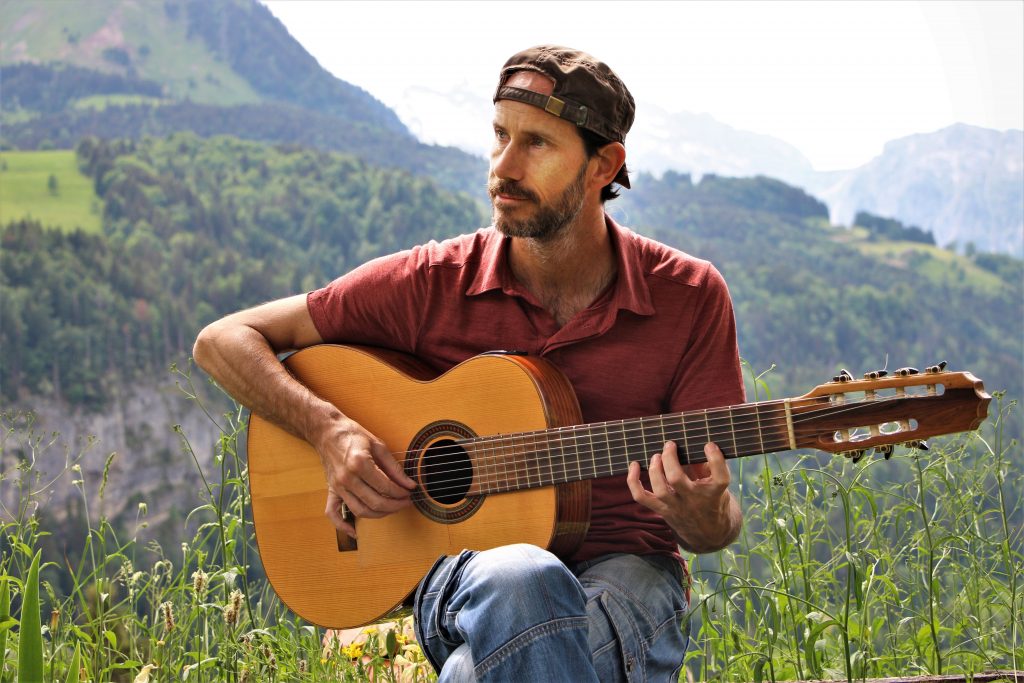
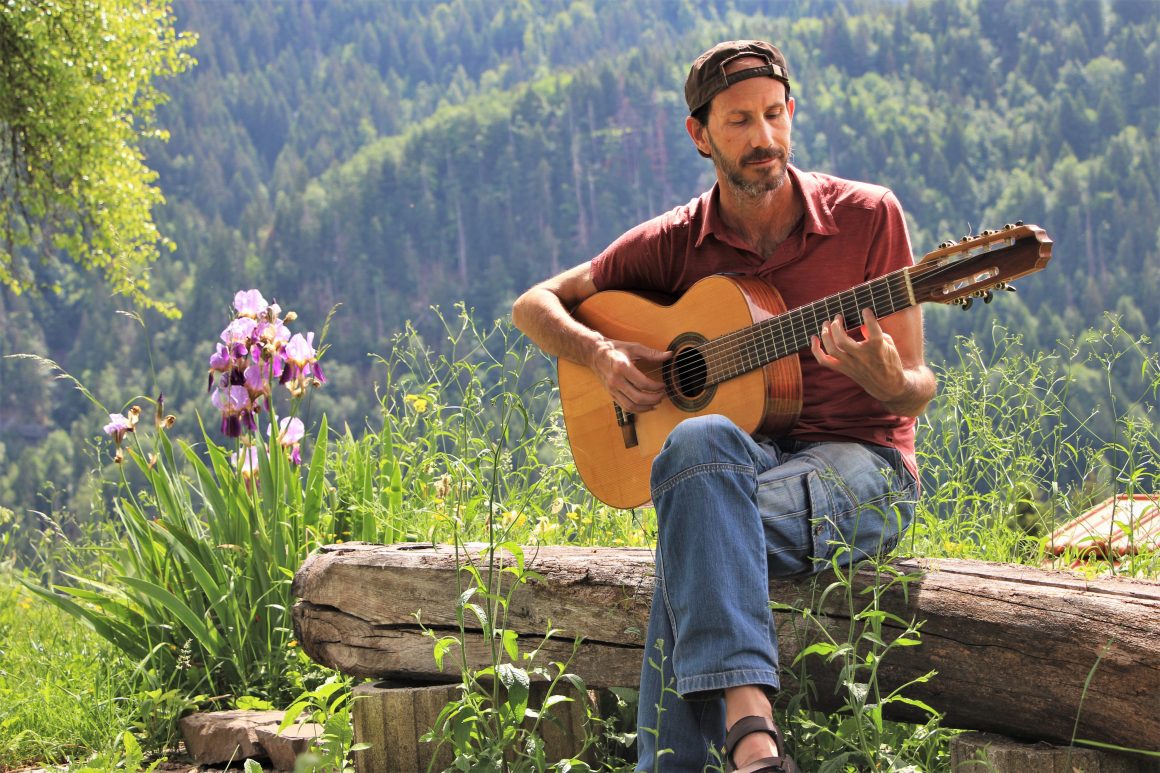
Before diving into this interview with Arnito, the artist we previously discovered through his album Musiques de mon monde, vol. 4, it becomes clear that his work is more than music—it is a living, evolving reflection of the world around him. Blending cultures, emotions, and cinematic imagination, Arnito creates without borders, treating composition as a journey rather than a genre.
Across this conversation, he opens up about freedom, identity, intuition, and the human depth behind sound. What emerges is the portrait of an artist who refuses limitation, constantly shaping music as a space of exploration, sincerity, and emotional truth.
Your music feels like a passport stamped by emotions, the opus is almost suspended outside of time. When you were creating it, were you chasing a particular state of mind rather than a specific musical style?
I believe that emotion and message are always the primary driving forces behind my creative process — the elements that give birth to the music. Ideally, I would like to say that I transcend genres in order to create something unique, because for me, the ultimate goal is not to be limited by a specific style. Categorizing music already erects walls for both the creator and the listener, each bringing their own references and expectations, along with a more or less open-minded perspective on the matter.
On the other hand, studying and listening to different repertoires deeply nourishes us, so it is always a question of balance.
For this new album, Musiques de mon monde, vol. 4, I would say that I developed these compositions by drawing inspiration from various influences from around the world — not as a “stylistic exercise,” but rather as a way of emphasizing my personal voice.
Furthermore, I tried to shape this album as an invitation to a kind of journey, through which the listener can contemplate different soundscapes: sometimes refined and conducive to meditation, sometimes more playful, filled with rhythm, texture, and experimentation.
You’ve traveled through many musical traditions transmitted orally rather than academically. What is something a street musician or local artist taught you that no conservatory ever could?
Good question! I would say that the most important thing is to develop our own identity.
In a conservatory, we learn repertoires and techniques in a more or less competitive environment, with established standards — for example, that Bach should be played a certain way, or that bebop should be approached through specific scales, chord substitutions, and so on. These teachings are extremely valuable for becoming a strong interpreter and musician.
However, in my opinion, I would never have composed or produced my music the way I do if I had only followed the conservatory path.
During my travels, I met many inspiring musicians and people with very strong identities. What struck me most was that these identities often came precisely from the fact that they had not followed conservatory “rules,” and had instead taken the time to search for their own paths. I met guitar players capable of creating incredible rhythms using only their right hand, others playing unique handmade instruments, and singers who were sometimes slightly out of tune, yet able to give goosebumps because of the profound meaning and palpable sincerity behind their words and intentions.
Many times, I experienced jams and improvisations with absolutely no sheet music — and sometimes without even sharing a common language or musical reference. These moments are powerful ways to become fully alert and reactive in the present moment, and to find ways of blending our sound so that everyone can fit in and feel comfortable, without ego or competition.
It also involves psychology, which in my opinion is essential in music but often underestimated in conservatories. Yet this human dimension is the very basis of coming together despite our different personalities, life paths, and expectations.
There’s a cinematic warmth throughout the album. Do you compose with images in your head, almost like directing invisible films?
It is hard to explain, and my way of composing is evolving. At this time I would say that my writing process looks a bit like the journey of a precious stone, from its place hidden in the ground to its exhibition on a neckless : it usually starts with an idea born from an improvisation or simply turning in my head, which I could call a raw stone. Not sure yet if this idea has the potential to become a diamond, but I feel there is something, so I am going to polish it, work on it and try to reveal its potential. In the end, not all those raw stones are becoming great : many times I abandonIt is very hard to explain, and my way of composing is evolving them or simply keep them for another potential future context (as not every neckless are meant to fit to everyone). That’s my most usual way of doing, but occasionaly I also have very precise compositions coming to me when I don’t expect them (like in my sleep). Then it’s not practical because I have to push myself to remember it, or wake up, grab a recorder and sing the main parts…
Your arrangements feel incredibly alive and organic at a time when many productions are becoming more digital and minimalist. Do you ever feel like you’re preserving a disappearing way of making music?
I am glad you noticed that, because it is something I deeply care about.
To me, music is a living entity. I do not have children, but I sometimes consider my music as a child of mine, since it comes out of me. Because of that, I try to treat it accordingly — in a way that allows this child to grow, feel free, experience and express emotions.
This child does not want to stay in jail, be cloned, or be fed with too many artificial products. It needs space, attention, and also surprise. And if I allow it to speak freely instead of controlling everything, it can even surprise me in return.
I also try to preserve it from an overly polluted environment. Perhaps that is why you will not find too many “modern” artefacts in my albums. Instead, I care about creating sonic playgrounds where this child can meet other children to play with, as well as flowers and nature to observe and grow alongside.
At the same time, I do not consider myself old-school. I simply work this way because it feels the most natural and sincere to me.
If your guitar could speak after all these years of traveling and composing with you, what do you think it would complain about the most?
Maybe it would complain about constant change — about being tired of jumping from one project to another, working intensely on a repertoire for only a few concerts or a recording session, and then never playing it again.
And if it had an ego, it might also feel frustrated about being treated merely as an instrument, rather than as the center of immediate and catchy attention. This is probably because I try to avoid what I call the “circus effect”: the moment when an excess of demonstrative technique and endless possibilities turns music into superficial showmanship, disconnecting it from the deeper beauty and magic that can only truly be felt with closed eyes — silences, nuances, melodies, dialogues…
For me, those subtle and invisible elements are often the true heart of music.
Listening to your music feels calming, but underneath there’s also movement, longing, and sometimes nostalgia. What emotion do you think secretly connects all 12 tracks on this album?
Passion, because it is a root and link to all emotions expressed through this music.
You’ve worked on symphonic pieces, chamber music, jazz projects, world music… Do you approach composing differently depending on the format, or is every piece ultimately born from the same inner voice?
I would say that the essence remains the same, in the sense that whatever the format, I always make sure to write something with a very solid foundation — something that is already effective in its most stripped-down and refined form. Music is a bit like architecture: if the foundations are not solid, then there is no point in building anything on top of them.
That being said, the format clearly influences the direction of the imagination, through the fantasy and projection of the final result. It also leads to different choices and technical considerations, which become part of the writing process itself, depending on the available sound palette.
For example, I have to think about the acoustic balance within a specific configuration, the unique characteristics of each instrument, or even the personality of a performer. All of these elements shape the music and influence the way a composition evolves.
Many artists chase trends, but your music feels timeless and deeply personal. Have you ever felt pressure to simplify your sound for today’s music industry?
I feel very lucky about it, because since I started recording music in 2003, I never had to experience this frustrating concept of concession. This is the greatest advantage of being independant : I can really express what I feel like, and even change radicaly from an album to another, there won’t be major trouble in the sense that there is not all an industry and financial investments behind, depending on my « product » to sell. My main motivation is music, and from the beginning I am always honnest with myself, trying to evolve in my own rhythm, with musicians I appreciate, and I really enjoy it: I am not trying to create what people want me to create, or what some people would think I should create because it would sell better, or simply because it’s trend. About simplifying my sound, it can mean many things, but in general I feel lile I have a tendency to privilege quite a simple sound, even if some tracks can seem quite dense or ornamented sometimes.
“Saveur vanille” has this festive, sun-filled energy that instantly lifts the mood. What kind of human moment did you imagine people living while listening to this track?
The title refers to Madagascar, a country well known for producing vanilla, and where, despite the many difficulties people face every day, you can still find an incredible sense of celebration and joy.
That was the spirit behind this composition: creating a melody and a rhythm capable of taking people by the hand and leading them away from their problems, bringing them together regardless of their social class or profession.
I can easily imagine someone listening to this track while stuck in a traffic jam and suddenly smiling inside this little bubble, sheltered for a moment from environmental stress, work pressure, and daily concerns.
Or perhaps an open-minded DJ plays the track on a dance floor somewhere in a remote club in East Asia. A few people begin to dance, letting themselves be carried away by the flow and energy of the music, creating brief but genuine moments of connection and complicity.
Maybe a couple even meets on that occasion… and three years later, they have a daughter named “Vanilla”
After 27 albums and hundreds of compositions, what still surprises you about music today — either about yourself as a composer, or about the emotional power music still has on people?
What still surprises me is the universality of music and the way it is deeply connected to both nature and time.
We often speak about differences because, of course, there are countless ways of making music: different aesthetics, styles, instruments, cultural identities, and traditions. But what impresses me the most are the common points that unite them all.
It may sound cliché to say that music is a universal language, but I truly believe it is. Anywhere in the world, a minor chord or interval tends to evoke sadness or melancholy, while a major chord is generally associated with brighter or more “positive” emotions. Anywhere, as the tempo rises, the intensity in the air rises as well.
Everywhere, music has the power to become a refuge for people — both listeners and musicians — a way of connecting human beings through stories, imagination, and above all, through the magic of sound.
I am also fascinated by how strongly music reflects its time and absorbs the cultures surrounding it. Without even mentioning broad historical periods such as the Baroque, Renaissance, Classical, or Romantic eras, if you simply listen to recordings from the last eighty years, you can often identify the decade within just a few bars, regardless of the style. The ways we think about, play, and produce music are deeply linked to the evolution of society and to the technologies available at a given moment.
A good example is the era we are currently living in, where AI has become omnipresent and raises many questions for everyone. Today, it is even possible to generate music using artificial intelligence — though I personally hope this won’t last, but that is another debate.
I see this multiplicity of connections, relationships, functions, and perspectives within music as an endless source of inspiration for a composer, and also as something profoundly necessary for humankind.
You may also like
-
From Concert Halls to Primetime: The Dual World of Composer Arın Aykut
-
Inside the Dystopian Pop Universe of Lolli Wren
-
No Drinks For Jimmy on ‘Broken’, Decades of Brotherhood, and Why Real Rock Never Dies
-
Futuristic Dreams: Lene 3000 Ascends With “Lights Off”
-
A Parallel Universe: Nomé Naku Drops the Cinematic Enigma “Amongst The Wolves”